This is what forty nine pages looks like

Writing "about fifty pages" tells you very little. So here is a whole copy, spread out. Every page below is from a real report, with the chart and the personal details taken out.

All forty nine pages of a Mulsangjae saju report laid out together

This is not one person's report. Pages have been taken from several different readings and the identifying details removed, so that nothing here belongs to anyone in particular.

Eight pages, closer up

Scroll the strip sideways. These are the pages people ask about most.

Swipe sideways
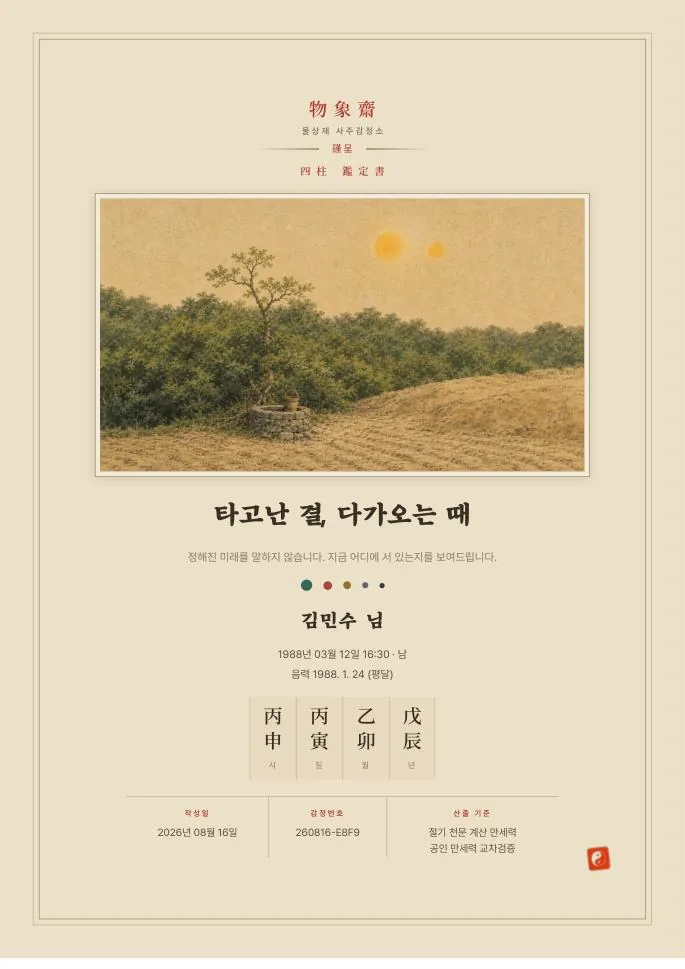
Sample page 1, the cover with the chart painting
Page 1. The coverThe painting made from that chart goes on the cover. No two come out the same.
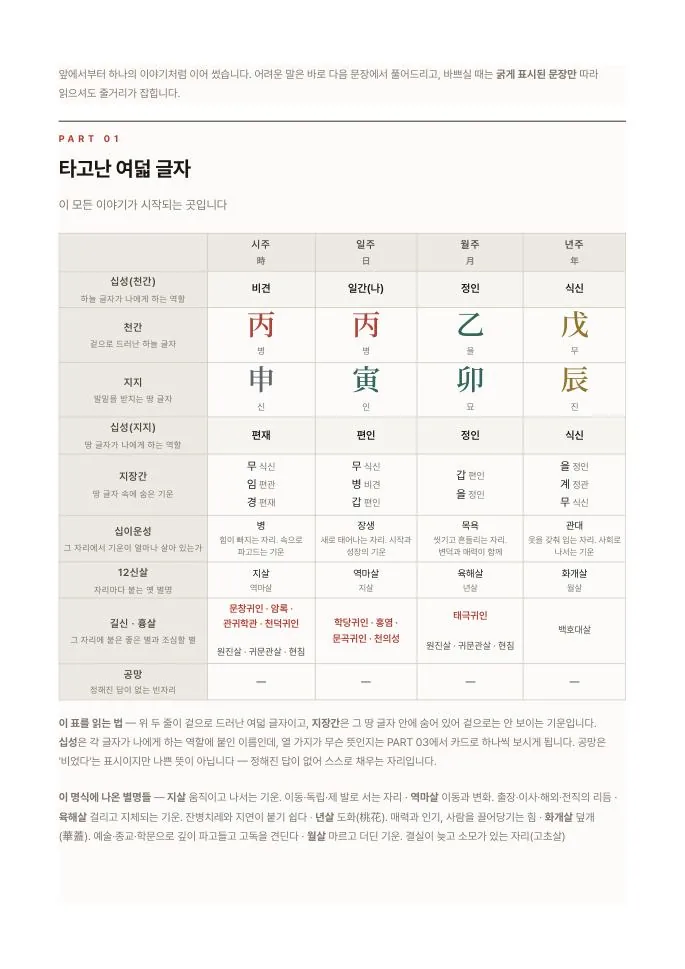
Sample page 4, the full eight character chart table
Page 4. Your eight charactersThe whole chart laid out as a table, with how to read it printed underneath.
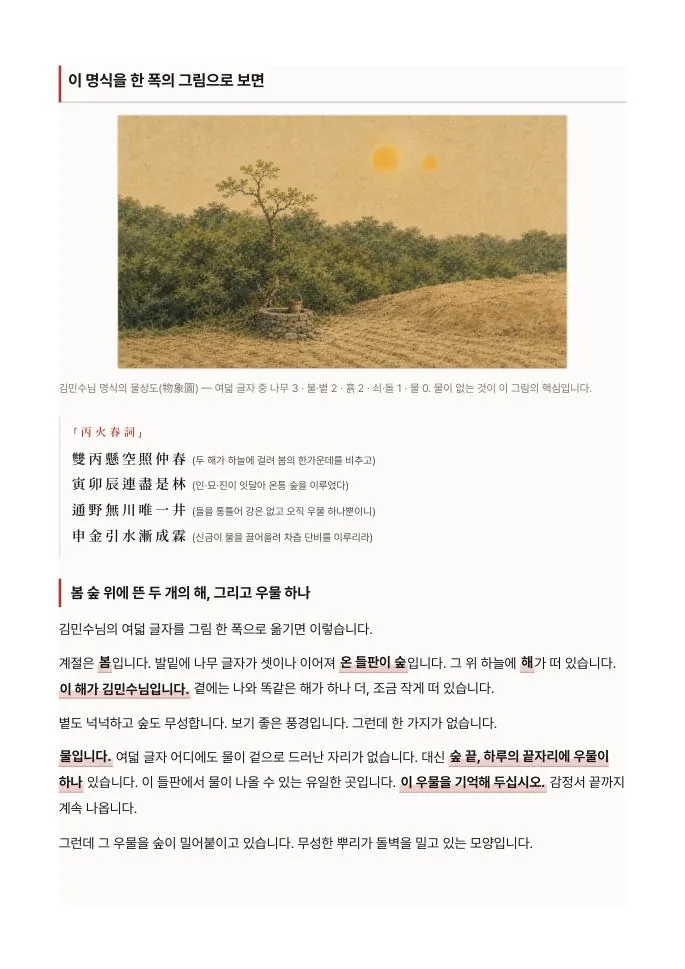
Sample page 6, the painting with its poem
Page 6. The painting and its poemBelow the picture, a short poem written for that chart alone, with its meaning.
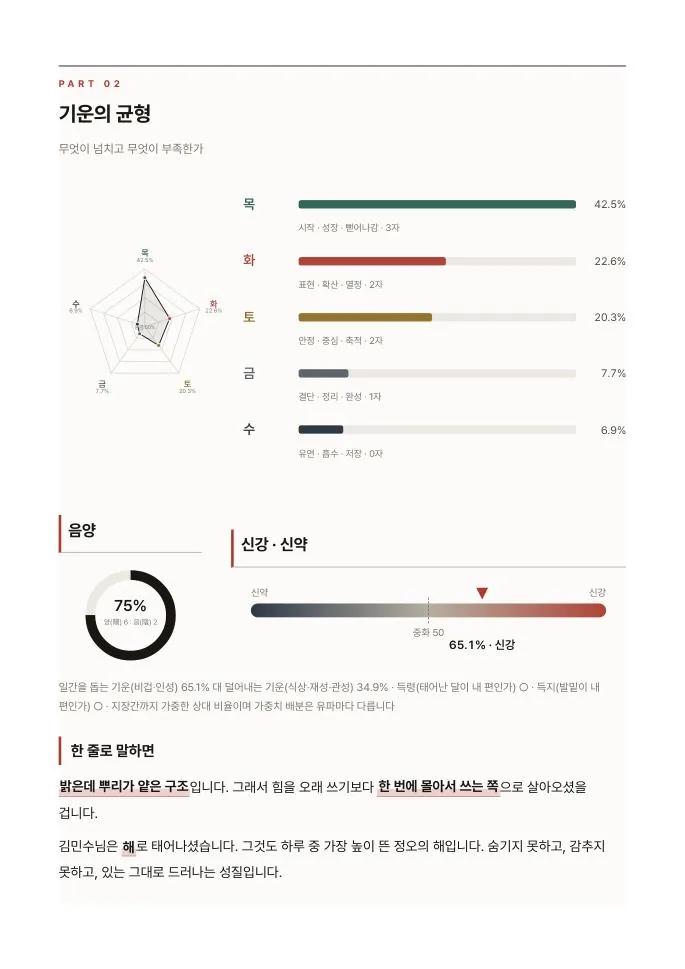
Sample page 11, the balance of the five elements
Page 11. Where your elements sitWhat is crowded and what is thin, shown as a ring and as bars.
Sample page 17, the ten forces cards
Page 17. Your ten forcesTen cards, ordered by how much you carry, with the strongest marked.
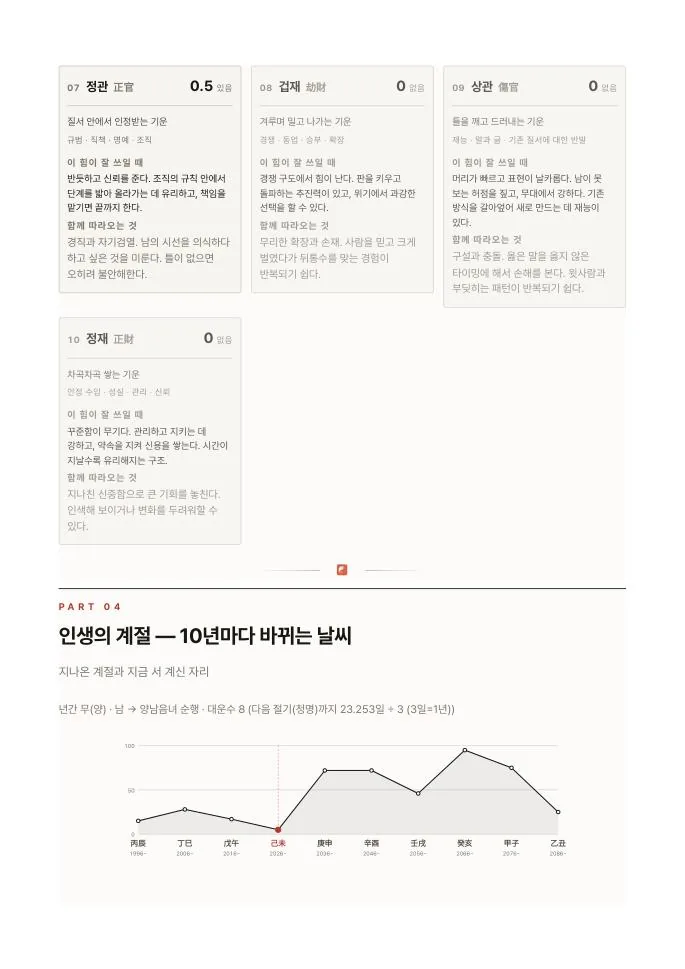
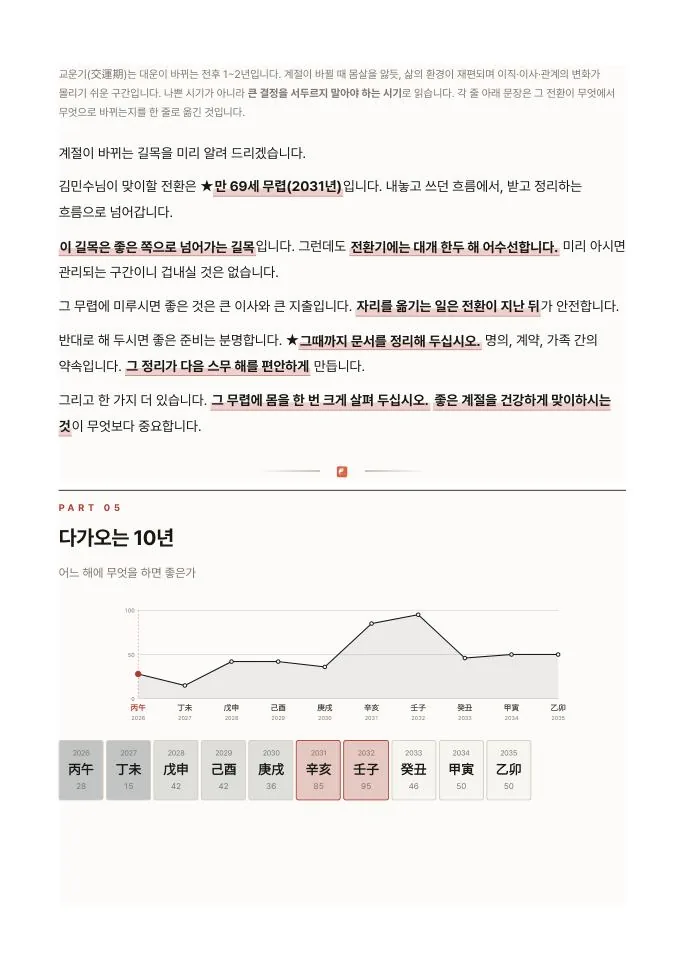
Sample page 21, the coming ten years as a graph
Page 21. The coming ten yearsYear by year as a graph. Which ones open up, which ones sit heavy.
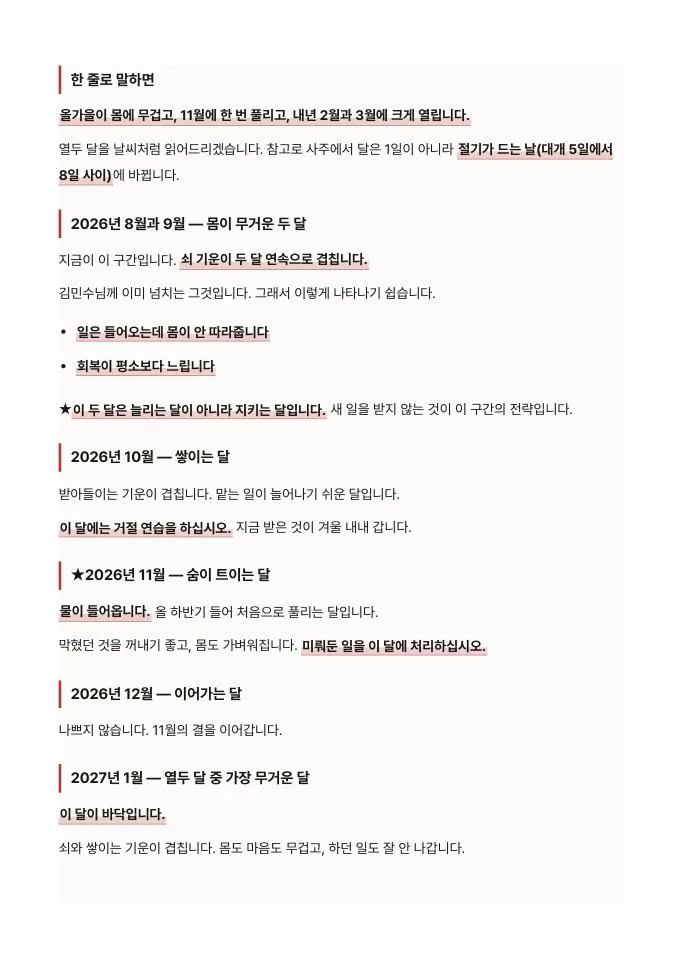
Sample page 25, money work love and health read separately
Page 25. The four areasMoney, work, love and health, each with a gauge and a plain summary.
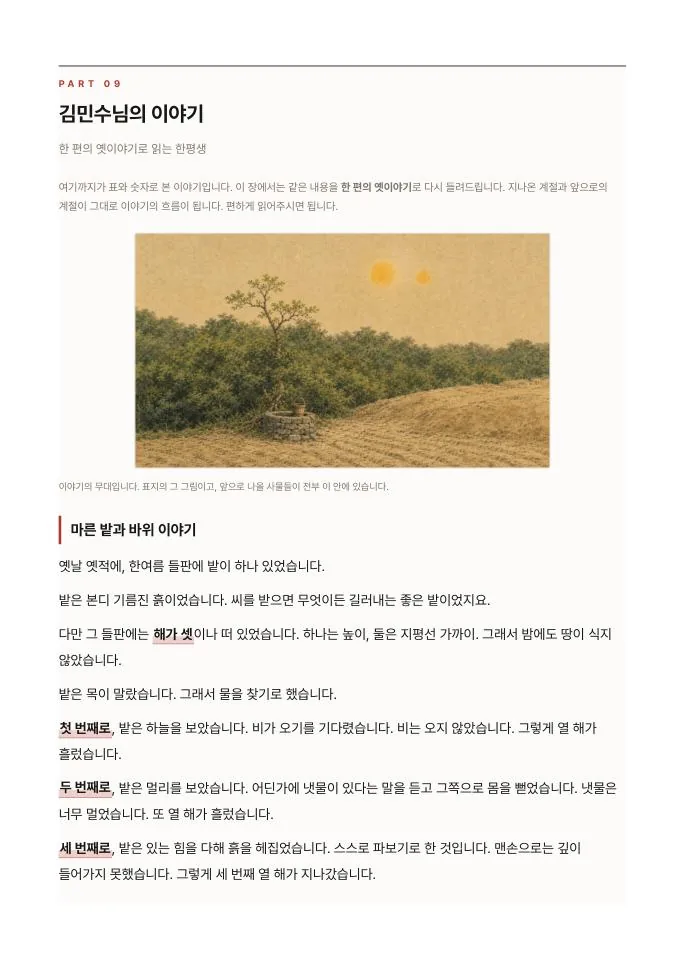
Sample page 43, the closing story
Page 43. Your storyThe report closes with a short tale written from that chart.

Why it runs this long

Length is not the point on its own. The length comes from a decision: every conclusion carries its reason.

Saying "money settles for you in your late thirties" takes one line. Showing which characters that comes from, why the season matters, what happens in the years either side, and what to do in the meantime, takes several pages. The second version is the one you can argue with, and the one you can still use in three years.

The time section alone accounts for a good part of it. Ten year blocks to age one hundred, the coming decade year by year, the coming year month by month.

How people actually use it

Readers tell me it does not get read once and filed. One printed it and keeps it on the desk. One went through it with a highlighter. Several have come back a year later to read the section for the year they had just entered.

That is what a document can do that a conversation cannot. More of what people said is here.

What you will not find in it

  1. No predictions of events. Tendencies and timing, not a schedule of what will occur
  2. No upsell. There is one report. There is no premium tier and no follow up package
  3. No talismans, no rituals, no remedies to buy
  4. No scare material. Hard passages are in there, always with something you can do

If something in your chart is calculated wrongly, or the question you asked about is missing, I rewrite it. That has not changed since the day I started.

Common questions

Is the sample a real report?
Yes. The pages come from real readings, with the charts and any identifying details removed. Several different reports are represented, so no single person's document is on display.
Will my report look exactly like this?
The structure is the same for everyone. The painting, the poem, the numbers and the writing are made from your chart alone, so the contents differ completely.
What format does it arrive in?
A PDF you can keep, print or read on a phone. The painting comes as a separate image file as well.

Read next

What does your chart look like as a landscape

Reports are written in Korean today.
An English edition is in preparation.

One email when English readings open. Nothing else.

Waitlist